Africa’s data centre market a generational opportunity

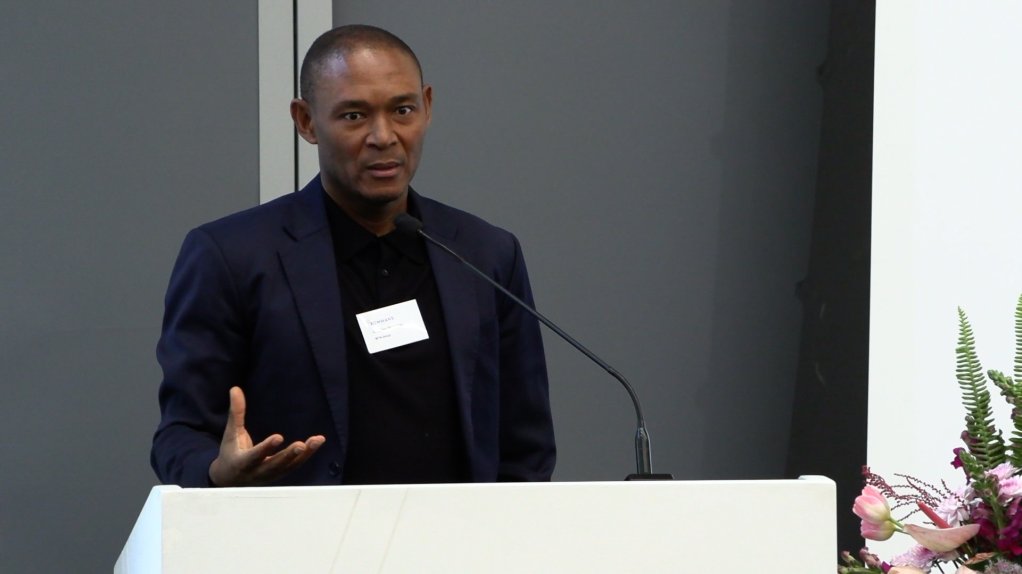
Cassava Technologies CEO South Africa and Botswana Ziaad Suleman and MTN Group CTIO Charles Molapisi discuss Africa’s data centre landscape at a seminar hosted by law firm Bowmans on May 20, 2026


Africa has the foundation to benefit from the growing global data centre ecosystem, delegates heard during law firm Bowmans' seminar titled 'Data centres and Africa’s digital opportunity: Business, legal and policy perspectives', held on Wednesday.
However, to leverage the vast opportunity, the continent needs to tap into its people and capabilities and develop sufficient infrastructure and power solutions.
Africa’s data centre market presented a generational investment opportunity, with anticipated growth from $3.5-billion in 2024 to a projected $6.8-billion by 2030, indicating an industry that was on the front foot, said Cassava Technologies CEO South Africa and Botswana Ziaad Suleman.
With the continent hosting less than 1% of global capacity, a generational opportunity emerges if Africa could grow to 3% to 5% of global data centre capacity by 2030.
This will require between $10-billion and $20-billion in capital deployment across the value chain.
Ideally, there should be data centres in every single location.
“We need a lot more, because we cannot be left behind as a continent [in terms of] the technology needs, the technology skills and the technology opportunity,” he said, pointing to North America’s data market of 42%, which was an indicator of how much opportunity and potential there was.
“Africa cannot be left behind because we are reliant on somebody else.”
MTN Group CTIO Charles Molapisi said that the next digital frontier was Africa.
This “once in a generation” moment is anchored by a population of 1.7-billion – 60% of whom will be under 25 – by 2030, along with five-fold data consumption growth, more than one-billion Internet users, five-fold increase in data use consumption and a $712-billion digital economy, besides others.
“The business case for proper investment in data centres on our continent exists.
“[However,] if we are not able to localise intelligence, if we do not build intelligence locally . . . we will export our raw data the same way we have been exporting our raw minerals, and then we import intelligence and pay a premium for access to that intelligence, because [of a lack of] owned infrastructure and capability,” Molapisi warned.
“We have the capability here, our data should be residing on the shores, and especially because of today's geopolitics,” Suleman explained, noting that if the continent had the capability, connectivity, people and data sovereignty, why risk placing data elsewhere.
South Africa, Nigeria, Kenya and Egypt currently lead the continent’s development, with emerging hubs in Morocco, Ghana and Ethiopia gaining traction.
He pointed out that five themes would define the next chapter of Africa’s data centre evolution, namely AI infrastructure build-out, consolidation, energy-first development, secondary market emergence and regulatory maturation.
Discussing structural headwinds and tailwinds, he said that, for seamless infrastructure operations, good power sources, proper connectivity, proper skills and supportive essential regulations were key.
The tailwinds include governments increasingly elevating data centres to critical infrastructure status with tax incentives, special economic zone (SEZ) frameworks and data sovereignty.
“We are starting to see SEZs. We are starting to see a lot more governments realise the fact that the regulations have to be more attractive. We are starting to see the incentivisations across the supply chain, and not necessarily only in infrastructure. Equally important to all of these things, we are starting to see governments and industries thinking about the data sovereignty requirements.”
Power will be critical moving forward, as currently, Africa’s electricity grid infrastructure cannot meet growing demand for data centres.
"Compute is monetised energy," said Molapisi. “Power is now the binding constraint on AI, but Africa holds the resource opportunity,” he added, highlighting 945 TWh in global AI demand by 2030 and the doubling of data centre electricity demand.
Africa has 1 000-fold renewable edge, as continental renewable potential exceeds projected demand by 2030.
“If you look at the potential for scale for Africa, we talk about 1 000x in terms of the capability to be able to actually generate more using the resource that we have at the energy level from the continent perspective.
“In the future the biggest discussion is going to be about tokens per watt. It is very clear that those who can produce tokens at a cheaper rate win the game.”
Article Enquiry
Email Article
Save Article
Feedback
To advertise email advertising@creamermedia.co.za or click here
Research Reports

Projects

Latest Multimedia

Latest News

Showroom

EIMS is an independent specialised environmental consulting firm offering the full spectrum of environmental management services across all sectors...
VISIT SHOWROOM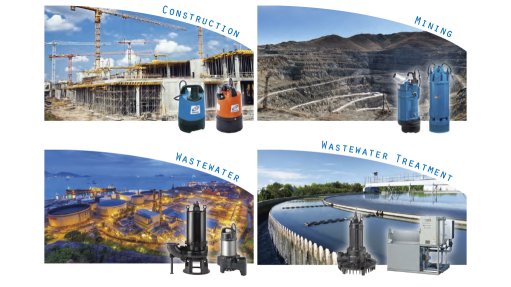
Tsurumi Pumps Africa is a specialist supplier of Japanese-engineered submersible pumping solutions, serving customers across the African continent.
VISIT SHOWROOM

Announcements
What's On
Subscribe to improve your user experience...
Option 1 (equivalent of R125 a month):
Receive a weekly copy of Creamer Media's Engineering News & Mining Weekly magazine
(print copy for those in South Africa and e-magazine for those outside of South Africa)
Receive daily email newsletters
Access to full search results
Access archive of magazine back copies
Access to Projects in Progress
Access to ONE Research Report of your choice in PDF format
Option 2 (equivalent of R375 a month):
All benefits from Option 1
PLUS
Access to Creamer Media's Research Channel Africa for ALL Research Reports, in PDF format, on various industrial and mining sectors
including Electricity; Water; Energy Transition; Hydrogen; Roads, Rail and Ports; Coal; Gold; Platinum; Battery Metals; etc.
Already a subscriber?
Forgotten your password?
Receive weekly copy of Creamer Media's Engineering News & Mining Weekly magazine (print copy for those in South Africa and e-magazine for those outside of South Africa)
➕
Recieve daily email newsletters
➕
Access to full search results
➕
Access archive of magazine back copies
➕
Access to Projects in Progress
➕
Access to ONE Research Report of your choice in PDF format
RESEARCH CHANNEL AFRICA
R4500 (equivalent of R375 a month)
SUBSCRIBEAll benefits from Option 1
➕
Access to Creamer Media's Research Channel Africa for ALL Research Reports on various industrial and mining sectors, in PDF format, including on:
Electricity
➕
Water
➕
Energy Transition
➕
Hydrogen
➕
Roads, Rail and Ports
➕
Coal
➕
Gold
➕
Platinum
➕
Battery Metals
➕
etc.
Receive all benefits from Option 1 or Option 2 delivered to numerous people at your company
➕
Multiple User names and Passwords for simultaneous log-ins
➕
Intranet integration access to all in your organisation